Rejuvenating the Republic
Today, India is celebrating 72nd Republic Day. It has been 71 years since we have our Constitution and in Principle at least, the power to govern is derived from the people of India. It has been a long journey since then and while our country has come a long way, I believe it is long overdue to assess the journey.
On 26th Jan 1950, we had some notional changes to the government structure, but what really changed on that day? Did anything really change on that day?
Growing up, I used to get the feeling from the history books and the popular media that somehow post-independence we created all our institutions anew. The institutions which were created for the people of India by the elected representatives of India and to wash away the subjugation of the last many centuries. But a deeper study revealed an altogether different story.
Continuing Colonial State
Most of the Government structure, including the legislative and judicial institutions existed before the Independence and at best were relabelled post-1947. Following list reveals the date of start of the key institutions of India.
- Parliament of India – 1927
- Supreme Court of India – 1937
- Indian Civil Service – (1857 with various changes in 1909, 1912, 1935 and 1947)
- Police (1861 with various changes till it became “Indian” from “Imperial”)
- Armed Forces (1895 with many units from Presidency armies existing before that)
In fact, most of the government structure that we have in place is actually derived from the Government of India act 1935. This is the act which formed the basis for the constituent assembly of India which created the constitution. As a matter of fact, the constitution itself was written mostly by “Sir” B.N. Rau. He was a member of the Indian Civil Service and was knighted by the British for his loyalty to the crown. The constituent assembly mostly just debated and passed the acts already written by the drafting committee.
Indian Constitution?
So how Indian is the Indian constitution? The Indian constitution essentially is an extension of already existing Colonial structures. What we needed was a reset and what we got was the furthering of the same oppressive structure. Even post-1947, the government structure is as alien to the people of India as it was before that.
This is reflected in all our day to day interactions with the government.
Government
This is not apparent immediately but a little thought makes it all evident. In no mature democracy is the government considered to be “ruling” the country which is the typical word that we use in India. When power is derived from the People then how can a government rule over the people? They can at best govern using the structures agreed with the people.
“Indian” Police Service
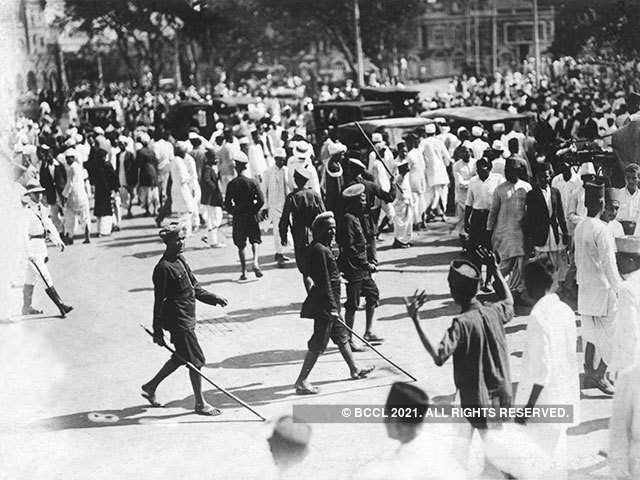
This is evident in the behaviour of the police. The names of the police forces might have been changed post-1947 but have the behaviour or the institutional culture really changed. The police forces even prior to 1947 were majorly Indian and these were the people who were actually oppressing the people of India through fear and force. Recall any old video of freedom struggle, all you will see are Indian policemen doing the lathi charge. These were the guys who were in CID, hunting and killing the freedom fighters. These were the people who actually killed innocents in Jalianwala Bagh, the commander might have been British the troops firing were not.

“Indian” Civil Service
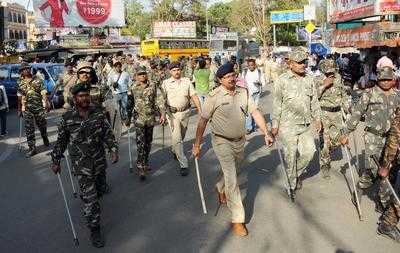
This is also the case with the Civil Services. It is power, prestige and corruption which is typically associated with the Civil Services for they were the representatives of the Imperial Masters and ruling on their behalf. The name might have changed from Imperial to Indian but the culture of the organisation has not changed and the same institutional memory continues. This is the reason why people in India want to avoid interaction with Police and most government organisations at all costs. All they see are hurdles, pathetic customer service and worst of all apathy to anything which doesn’t result in a bribe.
Armed Forces
Armed Forces are respected institutions in India but at the same time can’t deny that they were also the forces of oppression before 1947. Also, what can’t be denied that is the Indian National Army which fought against the British was treated very poorly post-independence when they fought for independence. In any other country, they would have been feted upon and given high ranking positions in the Army. Such was the culture propagated by our Armed Forces.
Not just that, the Chiefs of Armed Forces, continued to be British even post-independence. The first Indian chief of Indian Army was only in 1949, Air Force had its first Indian chief only in 1954 and Navy had its first Indian chief only in 1958. Many British officers continued till 1962. So were they truly Indian Armed Forces? Who knows what all secrets were being passed on to other governments.
The fact that we still have Sahayak system clearly shows that the vestiges of Colonial structures still pervade the armed forces. There is still huge discrimination between the Officer Corps and the Enlisted members of the Armed Forces. The fact that we still need to discuss this after almost 74 years of independence is a testament to the continued colonial structure where British were the Masters (Officers) and the Natives (Enlisted) were the servants.
We can take examples after examples of this continuing system that is still imposed on the people of India.
The Hard Reset
What we needed at the start was a Hard Reset of all government structures. What was needed was something of the sort of “Denazification” that was done at the end of World War 2 by the Allies in Germany to weed out any residual Nazi ideologies. Every symbol related to Nazi Germany except as a reminder of the wrongdoings were removed. Not just that even the state doesn’t consider itself to be the successor of the Nazi government but that of the Democratic government before that.
This is important for any nation-state that it derives legitimacy and also the principle of governance from its own cultural mores and not some foreign concept which has no basis in the Indian history or context.
The hard reset could have taken multiple forms
- Succession should have been declared not from British but from erstwhile Indian Empires or should have derived legitimacy from Indian Religious texts.
- All the Civil Servants should have been screened for loyalty and the ones known to be very close to the British should have been removed from Service. Only the ones loyal to the Indian cause should have been kept and promoted with preference been given to INA soldiers or freedom fighters.
- All Police Personnel known to be loyal to the British and known to have been active in the oppression of Indians should have been summarily dismissed from the service and even tried in court and given appropriate sentences.
- The Armed Forces should have removed all British Officers immediately. If a country like Israel or even China can create their own officer corps without relying on some colonial structure, so could have India. It might have faltered in the beginning but it would have worked out.
- Remaining civil servants, police personnel and armed forces members should have been asked to retrain or take refresher courses to align them with the Indian thought.
- All the Penal and Civil Codes in existence before 1947 should have been removed and new judicial codes should have been prepared thus removing any vestiges of the past.
This would have helped resolve many of the issues that we see now on a daily basis. Alas, this is all in past and all we can do now is learn and work forward.
The way forward
There are many reforms which have been proposed time and again to help clean up the system. While we as individual citizens might not be able to control the specific reforms, what we can do is voice our demand and not stop till it is actually implemented.
The social media is a great tool in this regard but what we need are Political Advocacy groups. Currently, most of the groups that we have in India are NGOs which are foreign-funded and most of the times espouse causes which are inimical to the interest of India. Right-minded people need to come out and engage with political leadership to ensure that the reforms get implemented.
There are specific reforms that need to be made which I would be covering in future articles as each is a vast topic in itself.


All the observations are hundred percent true and the suggestions are very much desired.
LikeLiked by 2 people